Plant-by-Plant Care
How to Care for a ZZ Plant
Learn how to care for a ZZ plant indoors: light, watering its water-storing rhizomes, soil, humidity, feeding, repotting, cleaning, and pet-safety notes.
Disclosure: The Plant Pages is reader-supported. Some pages include ads and affiliate links, and we may earn a commission from qualifying purchases, at no extra cost to you.
If you want a houseplant that looks polished and forgives almost everything you forget to do, the ZZ plant is hard to beat. Quick answer: to care for a ZZ plant (Zamioculcas zamiifolia) indoors, give it low to bright indirect light, water only when the soil has dried out completely (often every 2 to 3 weeks), plant it in fast-draining soil, and feed it lightly a couple of times in the growing season. The one real way to kill it is overwatering, which rots the water-storing rhizomes, so when in doubt, wait. Below I’ll walk through exactly how to care for a ZZ plant indoors, step by step, including the few places people go wrong.
ZZ plant care at a glance
Here’s the whole routine in one table. The sections below explain the why behind each line.
| Need | What the ZZ plant wants |
|---|---|
| Light | Low to bright indirect; faster growth in brighter light |
| Water | Only when the soil is fully dry, roughly every 2 to 3 weeks |
| Soil | Loose, fast-draining houseplant or cactus-style mix |
| Humidity | Average household humidity is fine |
| Temperature | 65 to 80°F (18 to 27°C), no cold drafts |
| Feeding | Diluted houseplant fertilizer, once or twice in spring and summer |
| Pot | Drainage holes, snug rather than oversized |
| Repotting | Every 2 to 3 years, or when rhizomes crowd the pot |
| Pets and kids | Mildly toxic if chewed; keep out of reach |
Why the ZZ plant is so hard to kill
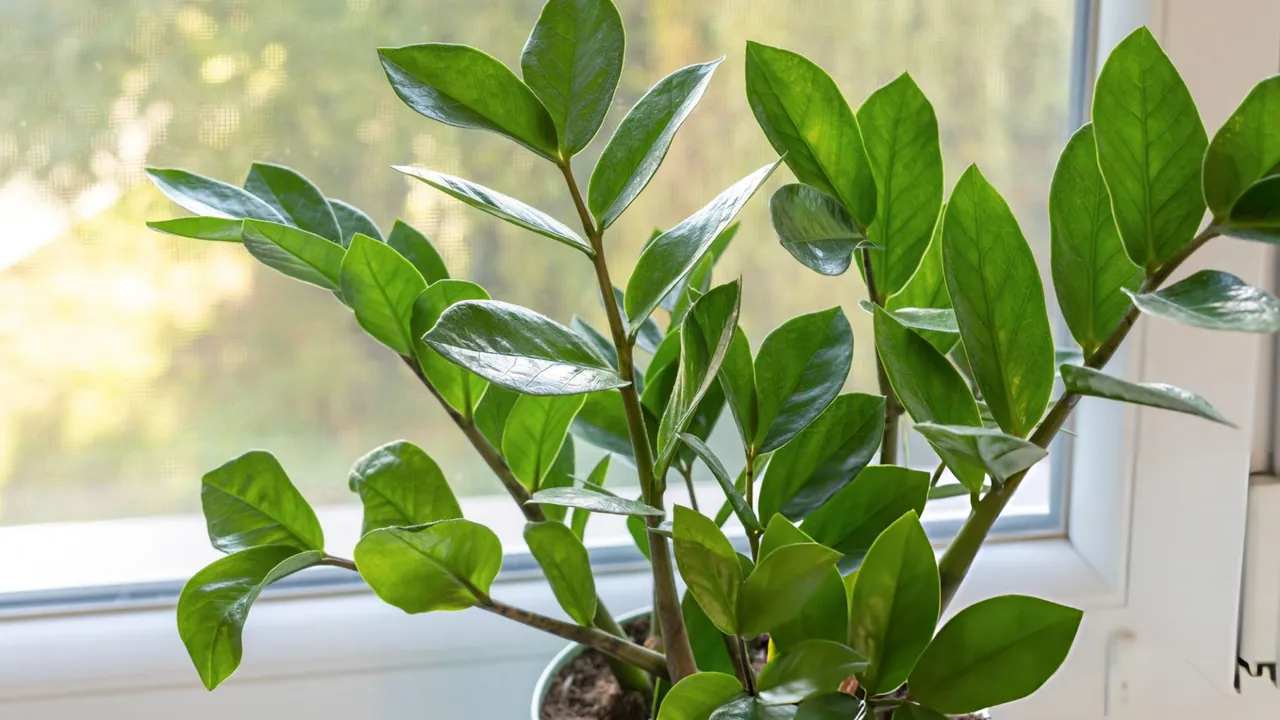
The ZZ plant comes from drought-prone regions of eastern Africa, where it survives long dry spells by storing water underground. Tucked just below the soil are thick, potato-like rhizomes that act as built-in reservoirs: when rain is scarce, the plant lives off that stored water, and when it rains, it tops the reservoirs back up. Above ground, smooth, arching stems carry glossy, dark green leaflets with a waxy finish that slows water loss. Add genuine tolerance for low light and average indoor air, and you have a plant that asks for very little, which is why it shows up so often in offices, lobbies, and the dim corners where most plants sulk.
The flip side of that toughness is the one mistake that undoes it: a plant built to ride out drought has no defense against constantly wet feet, so frequent watering is the surest way to kill it.
Light: low-light champion, brighter-light grower
Here is the headline most people care about: the ZZ plant tolerates low light better than almost any common houseplant. A north-facing room, a spot several feet from the nearest window, or an office lit mostly by overhead fixtures will all keep it alive and presentable.
Tolerating low light is not the same as preferring it, though. In a dim corner the plant essentially idles, holding its leaves but pushing very little new growth, and any new stems may come in longer and more sparsely leaved as they reach for light. In bright, indirect light, the same plant grows noticeably faster and fuller. So if you want a thriving, expanding plant rather than just a survivor, give it the brightest indirect spot you can spare.
What it does not want is harsh, direct midday sun on the leaves, which can scorch or bleach that glossy finish. A few feet back from an east window, or behind a sheer curtain on a brighter exposure, is close to ideal. In a windowless interior the plant will hang on, but a basic LED grow light on a timer keeps it growing rather than merely existing. Rotate the pot a quarter turn each week so the stems grow evenly, and for more options in dim rooms, see our roundup of the best indoor plants for low light.
Watering: the part that actually matters
If you remember one thing about how to care for a ZZ plant indoors, make it this. Those underground rhizomes mean the plant already carries its own water supply, so it wants the soil to dry out fully between drinks. Overwatering, and the rhizome rot that follows, is nearly the only way to kill a ZZ plant.
The reliable method:
- Wait until the soil is dry essentially all the way through, not just at the surface.
- Then water thoroughly until it runs from the drainage holes, so the whole root zone gets a drink.
- Empty the saucer afterward so the pot never sits in standing water, and when in doubt, wait a few days and check again.
Indoors this often works out to roughly every 2 to 3 weeks in the warmer months and even less in winter, but treat that as a loose guide rather than a schedule. Pot size, light, and season all shift the timing, so judge by the soil. Lifting the pot to feel how light it has become works well, since a light pot means dry soil, and a moisture meter helps if you would rather not guess.
The warning signs of overwatering are yellowing leaves, stems that go soft at the base, and a sour smell from the soil, all pointing toward rhizome rot. Underwatering is far less common and much gentler: a very thirsty ZZ plant may wrinkle its stems or drop a few leaflets, then perk back up once watered. Given the choice, always lean toward underwatering, because the plant shrugs off a missed drink and struggles to recover from waterlogged rhizomes. If your ZZ plant is yellowing, here’s our full guide on why a ZZ plant turns yellow.
Soil and pots: drainage does half the work
Because overwatering is the main risk, your soil and pot quietly do a large share of the work of keeping the plant healthy. Use a loose, fast-draining mix: a standard houseplant potting mix amended with perlite works well, and a cactus or succulent mix is an even safer bet because it drains quickly.
Choose a pot with drainage holes, no exceptions. A decorative cachepot is fine as long as the plant lives in a plastic nursery pot inside it that you can lift out to drain. Avoid an oversized container, too: a big pot holds a large volume of wet soil the rhizomes cannot use up quickly, and that lingering moisture is exactly what invites rot. Pot up just one size at a time.
Humidity and temperature: average is fine
This is one of the easiest sections, because the ZZ plant does not fuss about air. It handles average household humidity without complaint, so there is no pebble tray or humidifier to bother with. Misting earns no place here either: it does little for humidity and only leaves droplets sitting on the waxy leaves.
On temperature, keep it in the comfortable indoor range of about 65 to 80°F (18 to 27°C): wherever you are comfortable, it is comfortable. The ZZ plant is tropical and has no tolerance for frost, so keep it away from cold window panes in winter, drafty doors, and the dry blast of heating or AC vents. Sustained cold below roughly 45°F (7°C) can damage the foliage, so it is strictly an indoor plant in any climate with real winters.
Feeding: light and occasional
ZZ plants are not heavy feeders, which fits their lean nature. During the active growing season in spring and summer, a balanced liquid houseplant fertilizer diluted to about half the label strength, applied once or twice over those months, is plenty. Ease off entirely in fall and winter, when growth naturally slows or stops.
Restraint is the rule. Over-fertilizing builds up salts that can burn the roots and brown the leaf tips, and a plant this self-sufficient does not need a steady diet. If you notice a white crust on the soil surface, flush the pot with plain water to rinse the excess minerals out.
Two small habits make feeding safer. Never fertilize bone-dry soil; feed right after a normal watering so the diluted solution spreads evenly instead of concentrating against dry roots. And skip feeding any plant that is stressed, newly repotted, or sitting in cold, low-light winter conditions, since fertilizer rewards active growth and does nothing for a resting plant except leave salts behind.
Cleaning those glossy leaves
The ZZ plant’s signature look is that high shine, and a little upkeep keeps it. Indoors, dust settles on the broad leaflets, dulling the gloss and blocking some of the light the plant uses. Every few weeks, wipe the leaves gently with a soft, damp cloth, supporting each stem with your other hand so you do not snap it. Skip leaf-shine sprays and oily products, which can clog the leaf pores and attract more dust; plain water on a cloth is all this plant needs. Because the sap can irritate skin, wash your hands afterward if you are sensitive.
Growth habit and pruning
Set your expectations correctly and you will be much happier: ZZ plants grow at a slow to moderate pace. Rather than constantly unfurling new leaves, a healthy plant periodically sends up a fresh stem from the base, which emerges as a pale, arching shoot and gradually darkens and stiffens as its leaflets mature. New stems often appear in flushes during the growing season and then pause, so that quiet rhythm is normal, with growth slowing further in winter.
Pruning needs are minimal, with no shaping routine to learn. Mostly you are tidying: trim away any stem that yellows, browns, or gets damaged, cutting it cleanly at the base with sharp snips. If the plant grows lopsided, remove a wayward stem or two to even the silhouette, but most people leave the natural fountain shape alone because that is the look. Because the sap is irritating, wear gloves or wash your hands after cutting, and keep trimmed pieces away from pets and children.
If you would like to turn pruning into new plants, the ZZ plant propagates from both stem cuttings and individual leaflets, though it is famously slow to root: see our how to propagate a ZZ plant walkthrough.
Repotting: when and how
Plan on repotting every two to three years, but let the plant make the call rather than the calendar. The clearest signal is the rhizomes themselves: as they swell and multiply, they crowd the pot, push up against the surface, and can press so hard on a thin pot that they visibly bulge or distort its sides. Other cues include roots poking out the drainage holes and growth that has stalled despite decent light. A plant that is slightly snug is perfectly happy, so there is no rush to size up.
When it is time, repot in spring or early summer and move up just one pot size, with drainage holes. Refresh with the same loose, fast-draining mix. Ease the whole root and rhizome mass out and inspect it: firm, plump rhizomes are healthy, while anything soft, dark, mushy, or foul-smelling is rot to trim away with a clean blade. Set the plant back at the same depth it grew before, keeping the tops of the rhizomes just under the surface, since burying them deeper only invites rot. After repotting, water once to settle the soil, then hold off on fertilizer for about a month while the plant re-establishes. A short pause in growth afterward is normal, and wash your hands once you have handled the sap.
A note on toxicity and pets
One honest caveat with this otherwise easygoing plant: the ZZ plant is mildly toxic if chewed or eaten. The sap and tissues contain calcium oxalate crystals, the same irritants found in many popular houseplants, which can cause mouth and throat irritation, drooling, and stomach upset in cats, dogs, and people if a leaf is bitten or swallowed, and the sap can irritate skin and eyes on contact. This does not make the plant dangerous to own, and serious harm is uncommon, but placement matters in homes with curious pets or small children. Keep it where they cannot easily nibble it, wash your hands after pruning or repotting, and if a pet or child does chew it, rinse the mouth and contact a vet or doctor, especially if irritation persists.
Common problems and quick fixes
Almost every ZZ plant complaint traces back to water, light, or cold, and the symptom tells you which.
Yellowing leaves. Overwatering and early rhizome rot is the overwhelming cause, especially when several leaves yellow at once and the stem bases feel soft. Let the soil dry out fully, confirm the pot drains freely, and if you can, slide the plant out to check the rhizomes: firm is good, soft and brown is rot to trim away. A single old lower leaf yellowing now and then is just normal aging.
Mushy, falling stems. When whole stems flop or pull away at the base, that is rhizome rot one step further along. Unpot the plant, cut every soft rhizome and root back to firm tissue, repot the healthy remainder in fresh mix, and water sparingly while it recovers.
Drooping or splaying stems. If stems lean outward and lose the upright fountain shape, the usual cause is too little light (the stems stretch and weaken as they reach) or, less often, severe underwatering. Brighten its spot, check the soil, and correct whichever applies. Crispy brown leaf tips, meanwhile, usually point to fertilizer salt buildup; flush the pot with plain water and ease off feeding.
For a reliable reference on this species and its growing conditions, the Missouri Botanical Garden’s plant finder entry for Zamioculcas zamiifolia is a citation-worthy source.
Signs you’re getting it right
You will know your routine is working when the stems stand firm and upright, the leaflets keep that deep green shine, and the plant sends up a new arching stem now and then during spring and summer. The soil should go fully dry between waterings rather than staying damp for long stretches, which tells you the drainage and watering rhythm are in balance. With a ZZ plant, a little benign neglect really is the goal: keep the light reasonable and the watering restrained, and this is about as close to a set-it-and-forget-it houseplant as you will find.