Propagation
How to Propagate a Fiddle Leaf Fig
Learn how to propagate a fiddle leaf fig from stem cuttings in water or soil, or by air layering a leggy plant, with clear steps and realistic timelines.
Disclosure: The Plant Pages is reader-supported. Some pages include ads and affiliate links, and we may earn a commission from qualifying purchases, at no extra cost to you.
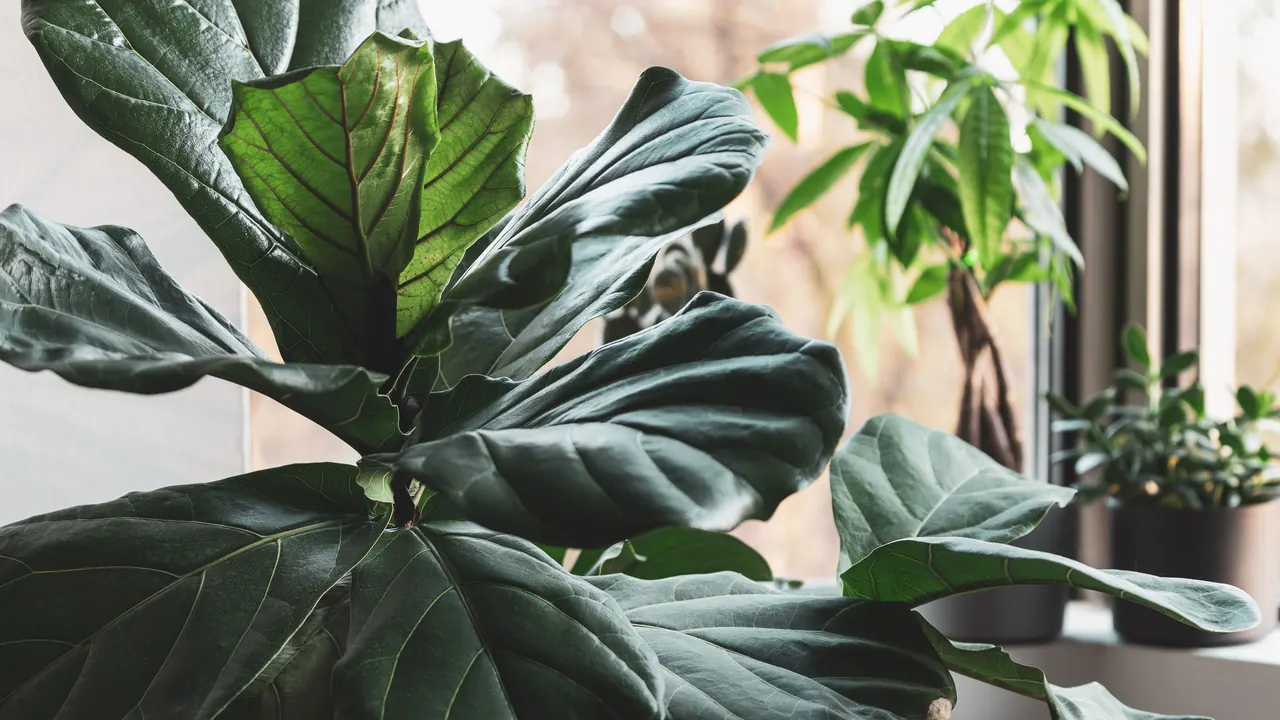
Propagating a fiddle leaf fig (Ficus lyrata) is one of the most satisfying things you can do with this plant, partly because it lets you turn one leggy, awkward tree into two fuller ones. Quick answer: to propagate a fiddle leaf fig, take a stem-tip cutting with at least one node and 1 to 2 leaves, rinse off the milky sap, then root it either in water (roots in about 4 to 6 weeks) or directly in moist, well-draining soil, keeping it warm and bright but out of harsh direct sun. For a tall, bare-stemmed plant, air layering is the gentler option. Single leaves will root but rarely grow into a plant, because they lack a node. Below I’ll walk through both methods, step by step.
What you can and can’t propagate
The single most important rule with fiddle leaf figs is this: you need a node. A node is the slightly thickened point on a stem where a leaf attaches and where dormant buds sit. That bud tissue is what eventually pushes out a new shoot and becomes the growing tip of a fresh plant. Roots can form in several places, but a new stem can only come from a node.
This is why a single leaf, popped into a glass of water, is a common disappointment. The leaf will often grow roots, sometimes a healthy clump of them, and it can sit there looking alive for months. But with no node, there is no bud to produce a stem, so it simply never grows into a plant. It stays a rooted leaf until it slowly declines. If you want an actual new fiddle leaf fig, take a piece of stem.
So when people ask how to propagate a fiddle leaf fig and picture a leaf in a jar, the honest answer is to redirect them to stem cuttings or air layering. Both of those include a node, and both give you a real shot at a new tree.
Two methods, and when to choose each
There are two reliable ways to propagate this plant at home:
- Stem-tip cuttings, rooted in water or in soil. This is the standard approach. You snip a length of stem that includes a node and a leaf or two, then root it. It’s simple, low-cost, and works well for most plants.
- Air layering, best for a tall, leggy plant. Here you encourage roots to form on a stem while it’s still attached to the parent, then cut below the new roots once they’ve developed. It’s a little more involved, but it lets you propagate the leafy top of a bare-trunked plant without gambling on a cutting.
If your fiddle is healthy and bushy and you just want another plant, take a stem-tip cutting. If your plant has grown into a tall pole with all its leaves bunched at the top and a long bare stem below, air layering lets you behead that leafy crown safely and, as a bonus, the stub left behind often branches out. I’ll cover cuttings first, since that’s what most people start with.
Taking a good cutting
Timing helps. Spring and early summer, during the active growing season, is when cuttings root fastest and the parent plant recovers most quickly. You can propagate in fall or winter, but rooting slows and more cuttings stall, so it’s a judgment call rather than a hard rule.
Use clean, sharp pruners or a knife. Wiping the blade with rubbing alcohol first reduces the chance of introducing rot. Then choose your cutting:
- Look for healthy, firm stem with at least one node. A length of about 6 to 10 inches is easy to work with.
- Keep 1 to 2 leaves at the top. Remove any lower leaves that would sit in water or soil, since submerged leaves rot.
- Cut just below a node, roughly a quarter inch under it. That node is where roots and, later, a shoot will form.
One leaf is plenty; two is fine. More than that and the cutting loses too much water through the leaves before it has roots to replace it. If your only available leaves are very large, some growers trim a leaf down by up to half to reduce water loss. That’s optional, and it’s a judgment call rather than a requirement.
Dealing with the milky sap
Cut a fiddle leaf fig and it bleeds a milky white sap. This is latex, the same family of compound that gives rubber trees their name, and it’s worth respecting. The sap is a mild skin and eye irritant for many people, and it’s toxic if swallowed, so keep it away from pets and children, and avoid rubbing your eyes while you work. Its cousin Ficus elastica oozes the same latex, and the steps for how to propagate a rubber plant mirror the ones below almost exactly.
Handle it simply. Right after cutting, hold the cut end under cool running water for a few seconds until the milky flow stops, or blot it with a damp paper towel. Rinsing also keeps the sap from sealing over the cut in a way that can slow rooting. Wash your hands afterward, and wipe any sap off the parent plant’s cut surface too. If you have sensitive skin, wearing gloves for the whole process is a reasonable precaution.
Once the sap has stopped and the cut is rinsed, let the very end air-dry for maybe 15 to 30 minutes if you’re rooting in soil, which lets the wound callus slightly. For water rooting you can skip the drying and go straight in.
Rooting in water
Water rooting is the most beginner-friendly route, mostly because you can watch progress. Seeing the first white root nubs appear is reassuring, and it tells you the cutting is alive and working.
Here’s the method:
- Place the cutting in a clear glass or jar of room-temperature water, deep enough to submerge the node but with the leaves well clear of the waterline.
- Set it somewhere warm and bright, with plenty of indirect light but out of harsh, direct sun, which can cook a leafless cutting and overheat the water.
- Change the water every 3 to 5 days, or whenever it looks cloudy. Fresh water carries more oxygen, which roots need, and reduces the chance of rot and slime.
- Wait. Roots usually appear in about 4 to 6 weeks, though fiddle leaf figs are slow, so don’t panic if it takes longer.
Patience is the real ingredient. As long as the stem stays firm and green and the node looks healthy rather than mushy or blackened, the cutting is fine even if nothing visible is happening yet. If the submerged stem turns soft and dark, that’s rot, and that cutting is unlikely to recover.
For more on keeping the parent plant in good shape so it has the energy to push fresh growth where you pruned, see our full fiddle leaf fig care guide.
Rooting in soil
Rooting directly in soil skips the water-to-soil transition, and many growers find soil-rooted cuttings end up with sturdier roots that are already adapted to potting mix. The trade-off is that you can’t see what’s happening, so it asks for a bit more faith.
To root in soil:
- Use a small pot with drainage holes and a light, well-draining mix. A standard houseplant potting mix loosened with perlite works well and keeps air around the developing roots.
- Optionally dip the cut end in rooting hormone. It isn’t essential for fiddle leaf figs, but it can nudge rooting along.
- Make a hole with a pencil, insert the cutting so the node is buried, and firm the mix gently around it so it stands up on its own.
- Water lightly so the mix is evenly moist but not soggy, then keep it that way. Bone-dry soil stalls rooting; waterlogged soil rots the cutting.
Warmth and humidity speed things up. A clear plastic bag or a propagation dome over the pot traps humidity and reduces water loss through the leaf, which matters because the cutting can’t yet drink through roots. Prop the bag off the leaf so it isn’t pressed against wet plastic, and air it out for a few minutes every day or two to prevent mold. Keep the pot warm and brightly lit, again out of direct sun.
The hard part with soil is the not-knowing. Resist the urge to tug the cutting to check for roots, which only damages the fragile new growth. Instead, watch the leaf: a cutting that holds its leaf firm and, after several weeks, pushes a new leaf at the tip has almost certainly rooted.
Potting up a rooted cutting
If you rooted in water, you’ll eventually move the cutting to soil. Timing matters here. Pot up once the roots reach about 1 to 2 inches long. Roots much shorter than that are delicate and easily damaged, while very long water roots, several inches and branching, have adapted so fully to water that they struggle when moved into soil and may partly die back, setting the plant back further.
When the roots hit that 1-to-2-inch window:
- Choose a small pot with drainage. A snug pot is better than a large one, since a big volume of wet soil around a small root system stays soggy and invites rot.
- Use a well-draining houseplant mix. Settle the cutting in at the same depth, cover the roots, and firm gently.
- Water it in, then keep the soil lightly and evenly moist for the first few weeks while the water-adapted roots learn to work in soil.
Expect a brief adjustment period. A newly potted, water-rooted cutting sometimes droops or looks sulky for a week or two as its roots transition. Steady warmth, bright indirect light, and consistent (not heavy) moisture carry it through. Hold off on fertilizer until you see clear new growth, which signals the roots are established and feeding.
Air layering a leggy plant
Air layering is the method to reach for when your fiddle leaf fig has become a tall, bare-stemmed pole with a tuft of leaves up top. Rather than cutting blind and hoping, you grow roots on the stem before you separate it, so you’re cutting a section that already has a root system. It’s more reliable for thick, woody stems than a plain cutting, and it lets you keep the handsome leafy crown.
The basic process:
- Pick a spot on the stem below the leaves where you’d like the new plant’s base, ideally just below a node.
- With a clean knife, remove a ring of bark about an inch wide all the way around the stem, exposing the lighter tissue underneath. Wipe away the milky sap as you go.
- Wrap that wounded section in a generous handful of damp sphagnum moss, then wrap the moss in plastic and tie it top and bottom so it stays put and holds moisture. Some people add a dab of rooting hormone to the exposed wood first.
- Keep the moss moist. Over several weeks to a couple of months, roots grow into it. You’ll often see them through the plastic.
- Once a solid mass of roots has formed, cut the stem just below the new root ball and pot up your now-rooted top as its own plant.
Air layering takes longer and asks for more setup than a quick cutting, but the payoff is a well-rooted, full-sized new plant and far less risk. The bare stub left on the parent will frequently push new branches below the cut, so you can end up with a bushier original plant too.
Realistic expectations and patience
It’s worth saying plainly: fiddle leaf figs are slow. They are slow to root, slow to push their first new leaf, and slow to bulk up into a full plant. A cutting that takes six or eight weeks just to show roots, then sits for a while before unfurling a single new leaf, is behaving completely normally. This is not a plant that rewards impatience, and a common mistake is disturbing or discarding cuttings that were actually doing fine.
A few habits stack the odds in your favor: take cuttings in spring or early summer, keep them warm and brightly lit, hold the humidity up while roots form, and otherwise leave them alone. Take more than one cutting if you can spare the material, since a little redundancy covers the occasional cutting that fails for no obvious reason.
If you find the wait nerve-wracking and want a confidence-building win first, start with something that roots fast and forgives almost anything. Our guide on how to propagate a snake plant walks through an easier plant that’s nearly foolproof, and the basic skills carry straight over.
For an authoritative reference on the species itself and its growing conditions, the Missouri Botanical Garden’s plant finder entry for Ficus lyrata is a reliable, citation-worthy source.
The bottom line
To propagate a fiddle leaf fig, take a stem-tip cutting with a node and a leaf or two, rinse off the irritating milky sap, and root it in water or moist soil somewhere warm and bright but shaded from harsh sun. Pot up water-rooted cuttings once their roots reach 1 to 2 inches, and lean on air layering when you’re working with a tall, leggy plant. Skip the single-leaf approach for anything but a science experiment, since it has no node to grow from. Above all, give it time: get the node, sap, light, and patience right, and one fiddle leaf fig can quietly become two.