Propagation
How to Propagate Pothos in Water
Learn how to propagate pothos in water: where to cut, why the node matters, rooting time, light, water changes, and exactly when to pot up into soil.
Disclosure: The Plant Pages is reader-supported. Some pages include ads and affiliate links, and we may earn a commission from qualifying purchases, at no extra cost to you.
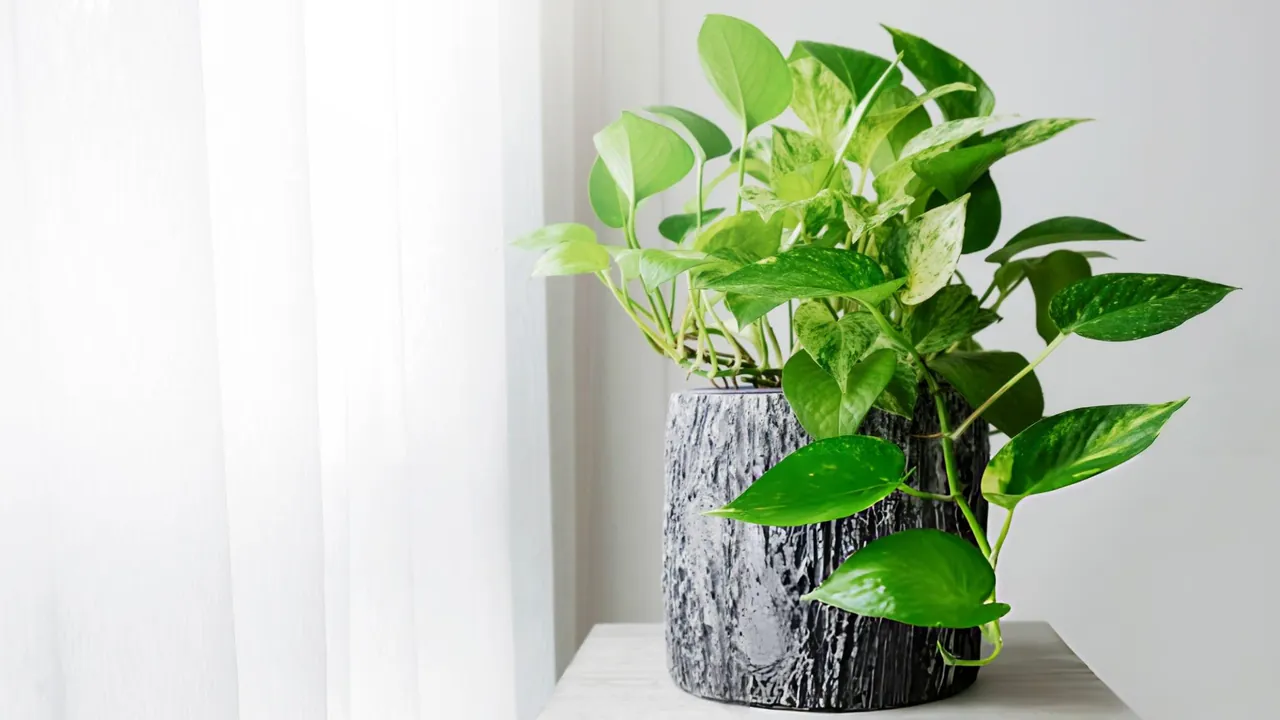
Pothos is the plant most people learn to propagate on, and for good reason: it roots in plain water on a windowsill with almost no effort. Quick answer: to propagate pothos in water, snip a 4 to 6 inch piece of vine just below a node (the bump where a leaf and a small brown aerial-root nub meet), strip off the lowest leaf, and stand the cutting in a clear jar so the bare node sits underwater while the leaves stay above it. Place it in bright indirect light, refresh the water weekly, and you should see roots in 2 to 4 weeks. Once those roots reach 1 to 2 inches, pot the cutting into soil. Here is the full method, plus the small details that decide whether it works.
What you need before you start
You barely need anything, which is part of the appeal. Gather a healthy pothos to take cuttings from, a clean pair of scissors or pruning snips, and a clear glass or jar. That’s the whole kit.
A few notes on each:
- A healthy parent plant. Take cuttings from a vine that looks vigorous, with firm stems and good color. A long, trailing vine that you’d trim anyway is the perfect candidate, since propagating doubles as tidying up.
- Clean, sharp scissors. A clean cut heals faster and is less likely to introduce rot. Wipe the blades with rubbing alcohol if they’ve been cutting other plants.
- A clear container. Glass lets you watch the roots develop, which is half the fun and also tells you when to pot up. A narrow neck helps hold the cutting upright with the leaves above the rim.
That’s it. You don’t need rooting hormone for pothos in water, and you don’t need any special additives. Plain tap water that has sat out for a bit is fine.
The node is the whole secret
If you take away one thing about how to propagate pothos in water, make it this: roots only grow from the node. A node is the slightly thickened bump on the stem where a leaf attaches, and right beside it you’ll usually spot a small brownish nub. That nub is an aerial root, a root the plant is already trying to grow, and once it sits in water it takes off.
A leaf on its own will not root. A smooth length of stem with no node will not root. People sometimes drop a single pretty leaf in a glass, wait a month, and wonder why nothing happened. The leaf had no node, so there was nothing for roots to form from. Every cutting you take must include at least one node, and that node needs to be the part sitting underwater.
Look closely at any pothos vine and you’ll see the nodes spaced out along the stem, one at the base of each leaf. That regular spacing is what makes pothos so forgiving: almost any healthy segment you cut will contain a node or two.
Step by step: taking and rooting the cutting
Here’s the process from start to first roots.
1. Find your cutting. Pick a healthy section of vine with a few leaves. Trace down from a leaf until you find the node at its base.
2. Cut just below a node. Using clean scissors, snip the stem about a quarter inch below the node. Aim for a piece roughly 4 to 6 inches long with two or three leaves. Cutting below the node (rather than above it) makes sure the node travels with your cutting, because that’s the part that will root.
3. Remove the lowest leaf. Pinch or snip off the leaf nearest the cut end. This exposes that lowest node so it can sit bare in the water, and it keeps you from submerging a leaf, which would rot and foul the water.
4. Place it in the jar. Stand the cutting in your clear container and add water until the bare node (and ideally an inch or so of stem) is covered. The remaining leaves should stay above the waterline. Submerged leaves break down, cloud the water, and invite rot, so keep them dry.
5. Set it in bright indirect light. A spot near a window that gets plenty of light but no harsh, direct midday sun is ideal. Direct sun can overheat a small jar of water and stress the cutting, while a dim corner slows rooting to a crawl. An east-facing windowsill is close to perfect.
6. Refresh the water weekly. Once a week, swap in fresh water, or just top it up between changes if the level drops or the water starts to look cloudy. Fresh water carries more dissolved oxygen and keeps the cut end clean, both of which encourage roots and discourage rot.
Then comes the hardest part, which is leaving it alone. Resist the urge to pull the cutting out to inspect it every day. Disturbing a forming root can set it back.
How long until you see roots
For most pothos cuttings, the first roots appear in about 2 to 4 weeks. You’ll see tiny white nubs push out from the node underwater, and from there they lengthen fairly quickly into a small cluster of roots.
A few things sway the timing:
- Warmth. Pothos roots faster in a warm room, somewhere in the low-to-mid 70s Fahrenheit. A chilly windowsill in winter can stretch the wait considerably.
- Light. Bright indirect light fuels rooting. The dimmer the spot, the slower the progress.
- Season. Cuttings taken in spring and summer, during the plant’s active growth, generally root faster than those started in the short, dark days of winter.
If a few weeks pass with no roots but the cutting still looks healthy (firm stem, green leaves), don’t give up. Slow is normal, especially in cooler months. What you don’t want to see is the stem going soft, mushy, or brown at the base, which signals rot. If that happens, that cutting is usually a loss, but it costs you nothing to take a fresh one and try again.
Multiple cuttings make a fuller pot
A single rooted cutting grows into a single thin vine, which can look sparse on its own for a while. The fix is simple: root several cuttings at once and pot them up together.
You can stand multiple cuttings in the same jar to root, as long as each one has a node underwater and the leaves stay above the rim. When it’s time to plant, set three, five, or more rooted cuttings into one pot. That instantly gives you a bushier, more finished-looking plant rather than a lone trailing stem, and the cuttings will fill in faster as a group.
This is also the cheapest way to turn one leggy, bare-stemmed pothos into a couple of full, lush plants. Trimming the long vines encourages the parent to branch out, and the trimmings become your next pots. The same low-effort logic that makes pothos a favorite among the best indoor plants for low light makes it ideal for building up a collection from a single plant.
When and how to move the cutting to soil
Here’s a detail that trips up a lot of beginners, so it’s worth being specific. The best time to pot up is when the roots are about 1 to 2 inches long. That’s the sweet spot.
Why not wait longer? Roots that grow in water are structurally a bit different from roots that grow in soil, and the longer a cutting lives in water, the more committed those water roots become. A cutting with short, young roots adapts to soil far more easily than one with a long, established water-root system that then has to adjust to a completely different environment. In other words, sooner is easier than later. If you let the roots get long and tangled before potting, expect more of a sulk while the plant adjusts, and possibly some yellowing or wilting as the water-adapted roots transition.
To pot up:
- Choose a small pot with drainage holes and fill it with a loose, well-draining houseplant mix.
- Make a hole, settle the rooted cutting in so the roots are covered and the lowest leaf sits just above the soil, and gently firm the mix around it.
- Water it in thoroughly so the soil settles around the new roots, then let it drain.
For the first week or two after potting, keep the soil a touch more consistently moist than you would for an established pothos. This eases the transition while the water roots adapt to soil. After that, switch to the normal routine: let the top inch or so of soil dry out between waterings. If you enjoy the water-rooting method and want to try it on a tougher, more upright plant next, the approach carries over well to propagating a snake plant, though that one roots more slowly.
Can pothos just live in water forever?
Yes, pothos can live in water long term, and plenty of people keep one in a jar on a shelf indefinitely. If that’s your plan, top up the water as it evaporates, refresh it periodically to keep it clean, and add a weak dose of liquid houseplant fertilizer every few weeks, since plain water offers no nutrients.
The honest trade-off: a pothos kept in water permanently grows more slowly and stays smaller and less lush than the same plant in soil. Water simply can’t supply nutrients the way potting mix can, and the roots a plant grows for water are less efficient at supporting big, fast top growth. A water-grown pothos is a lovely, low-maintenance decorative piece, but if you want a full, cascading vine, soil is where it will thrive.
So treat permanent water culture as a legitimate choice for looks and convenience, not as the path to a thriving, fast-growing plant. If at any point your water-dwelling pothos starts looking tired, that’s usually your cue to pot it up into soil and let it stretch its legs.
Quick troubleshooting
A few common hiccups and what they mean:
- Stem turning soft, brown, or mushy. That’s rot, usually from a submerged leaf fouling the water or water that went too long without a change. Take a fresh cutting, keep leaves above the line, and refresh the water more often.
- No roots after several weeks, but the cutting looks fine. Almost always too cold or too dim. Move it somewhere warmer and brighter and keep waiting; slow rooting is common in winter.
- Cloudy or smelly water. Time for a change. Cloudy water signals bacteria building up, which is easy to fix by swapping in fresh water and double-checking that no leaf is sitting underwater.
- A leaf yellowing on the cutting. A single lower leaf yellowing while the cutting roots is often just the plant redirecting energy and is usually nothing to worry about. If multiple leaves yellow and the stem softens, suspect rot instead.
The bottom line
Propagating pothos in water comes down to one rule and a little patience: include a node, keep it underwater with the leaves above the line, give the jar bright indirect light, and refresh the water weekly. Roots arrive in 2 to 4 weeks, and once they reach 1 to 2 inches you pot up into soil while the transition is still easy. Root several cuttings at once for a fuller pot, and remember that while pothos can live in water for the long haul, it will always grow better with its roots in soil. It’s one of the most satisfying first projects in houseplant propagation, and it costs you nothing but a snip and a jar.